The Rotary Club of Akron had the privilege of listening to Justice Pat DeWine Supreme Court Justice for the State of Ohio at our Tuesday, May 25, 2021 Club meeting. Justice DeWine provided the Club with an overview of the day-to-day operations of the Supreme Court of Ohio and the types of cases they review and act upon. Click here to view the meeting
Justice DeWine began his six-year term on the Supreme Court of Ohio on Jan. 2, 2017, following his statewide election in November 2016.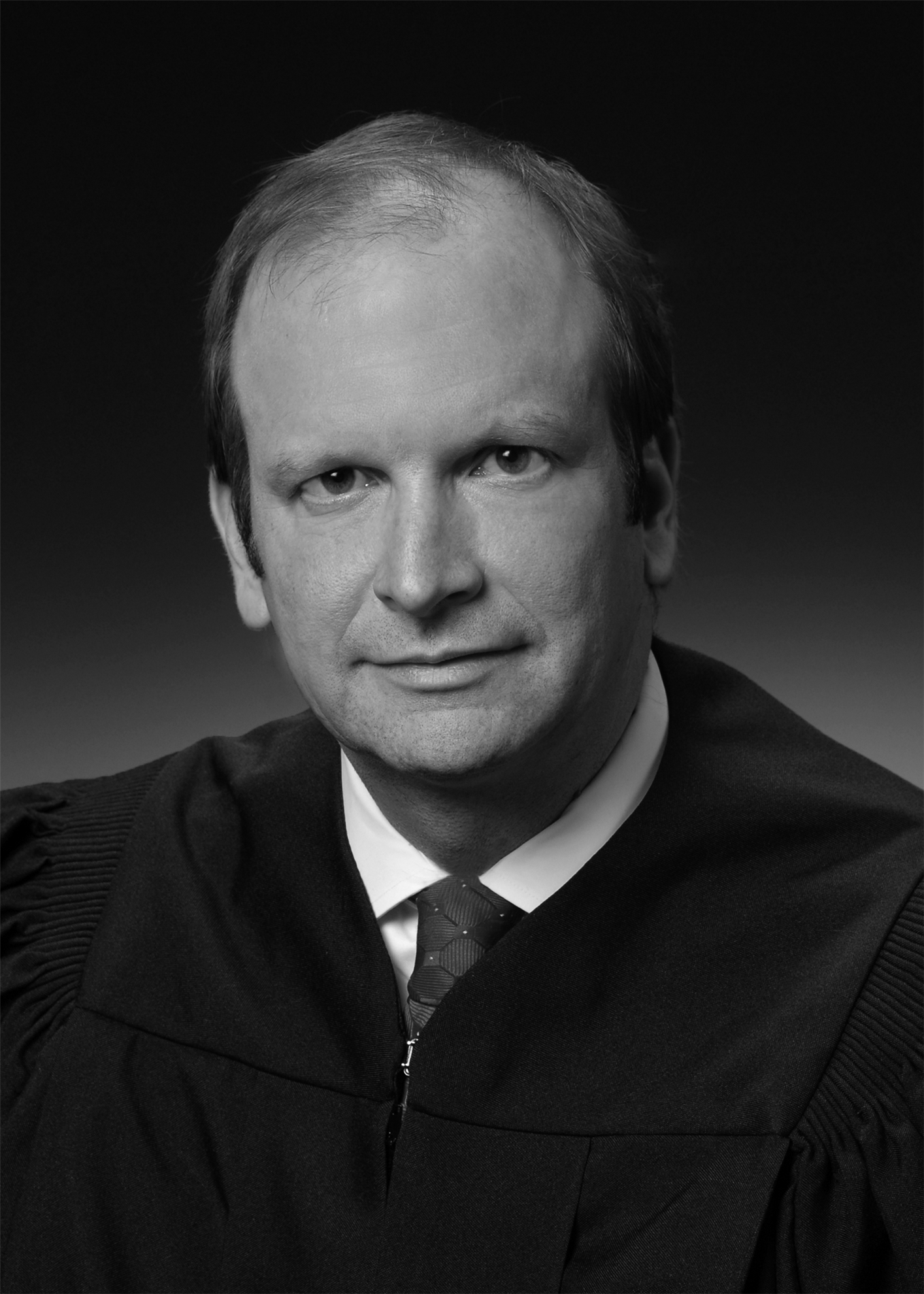
Prior to his election to the Supreme Court, Justice DeWine served on the Hamilton County Common Pleas Court from 2009-2013 and then joined the First District Court of Appeals in February 2013.
In combination with his service on the Ohio Supreme Court, Justice DeWine has committed to further the rule of law through education. He is an adjunct professor at the University of Cincinnati in both the College of Law and in the McMicken College of Arts and Sciences. He teaches Appellate Practice and Procedure to law students, and courses in Ohio Government & Politics and American Courts to undergraduate students in the political science department.
What is the jurisdiction and authority of the Ohio Supreme Court?
The Supreme Court is established by Article IV, Section 1 of the Ohio Constitution. Article IV, Section 2 of the Constitution sets the size of the Court and outlines its jurisdiction. Article IV, Section 5 of the Constitution grants rule making and other authority to the Court.
The Supreme Court is the court of last resort in Ohio. Most of its cases are appeals from the 12 district courts of appeals. The Court may grant leave to appeal felony cases from the courts of appeals and may direct a court of appeals to certify its record in any civil or misdemeanor case that the Court finds to be "of public or great general interest."
The Supreme Court of Ohio consists of 6 Justices and a Chief Justice. The Justices are elected to six-year terms on a nonpartisan ballot. Two Justices are chosen at the general election in even-numbered years. In the year when the Chief Justice runs, voters pick three members of the Court.
A person must be an attorney with at least six years’ experience in the practice of law to be elected or appointed to the Supreme Court. Appointments are made by the Governor for vacancies that may occur between elections.
The Supreme Court of Ohio has appellate jurisdiction in cases involving questions arising under the Ohio or United States Constitutions, cases originating in the courts of appeals, and cases in which there have been conflicting opinions on the same question from two or more courts of appeals. The Supreme Court hears all cases in which the death penalty has been imposed. These cases currently include both appeals from courts of appeals affirming imposition of the death penalty by a trial court and, for capital crimes committed on or after Jan. 1, 1995, appeals taken directly from the trial courts. Finally, the Supreme Court's appellate jurisdiction extends to review of the actions of certain administrative agencies, including the Public Utilities Commission.
Other Supreme Court Authorities:
- The Ohio Constitution grants the Supreme Court exclusive authority to regulate admission to the practice of law, the discipline of attorneys admitted to practice, and all other matters relating to the practice of law.
- The Ohio Constitution also gives the Supreme Court authority to prescribe rules governing practice and procedure in all courts of the state and to exercise general oversight over all state courts.
How does a Case get to the Ohio Supreme Court?
90% of all cases are heard in State courts.
- Over 1000 jurisdictional appeals are filed at the Ohio Supreme Court level every year.
- 43 cases were reviewed by the Ohio Supreme Court in 2019.
- Parties appealing to the Ohio Supreme Court submit briefs.
- Briefs are reviewed by Justices and a law clerk who prepares a document about the case for the Justices.
- After reading the briefs, oral arguments are scheduled.
- Individuals are provided 15 minutes to argue their case in front of 7 judges
- Hearings are scheduled for 2-3 days every 2-3 weeks.
- Judges hold a conference and decide who will write the decision
- Whichever Justices are in the majority of the decision must decide who will write the opinion.
- Opinion is circulated to the other Justices
- After reviewing the Opinion, the Justices vote on the case again.
- Decision by the Ohio Supreme Court cannot be appealed to the U.S. Supreme Court if it is a State law. If Federal law, the case can be appealed to the U.S. Supreme Court.
For further information on the Ohio Supreme Court, go to www.supremecourt.ohio.gov